The Region United by the Anacostia Watershed
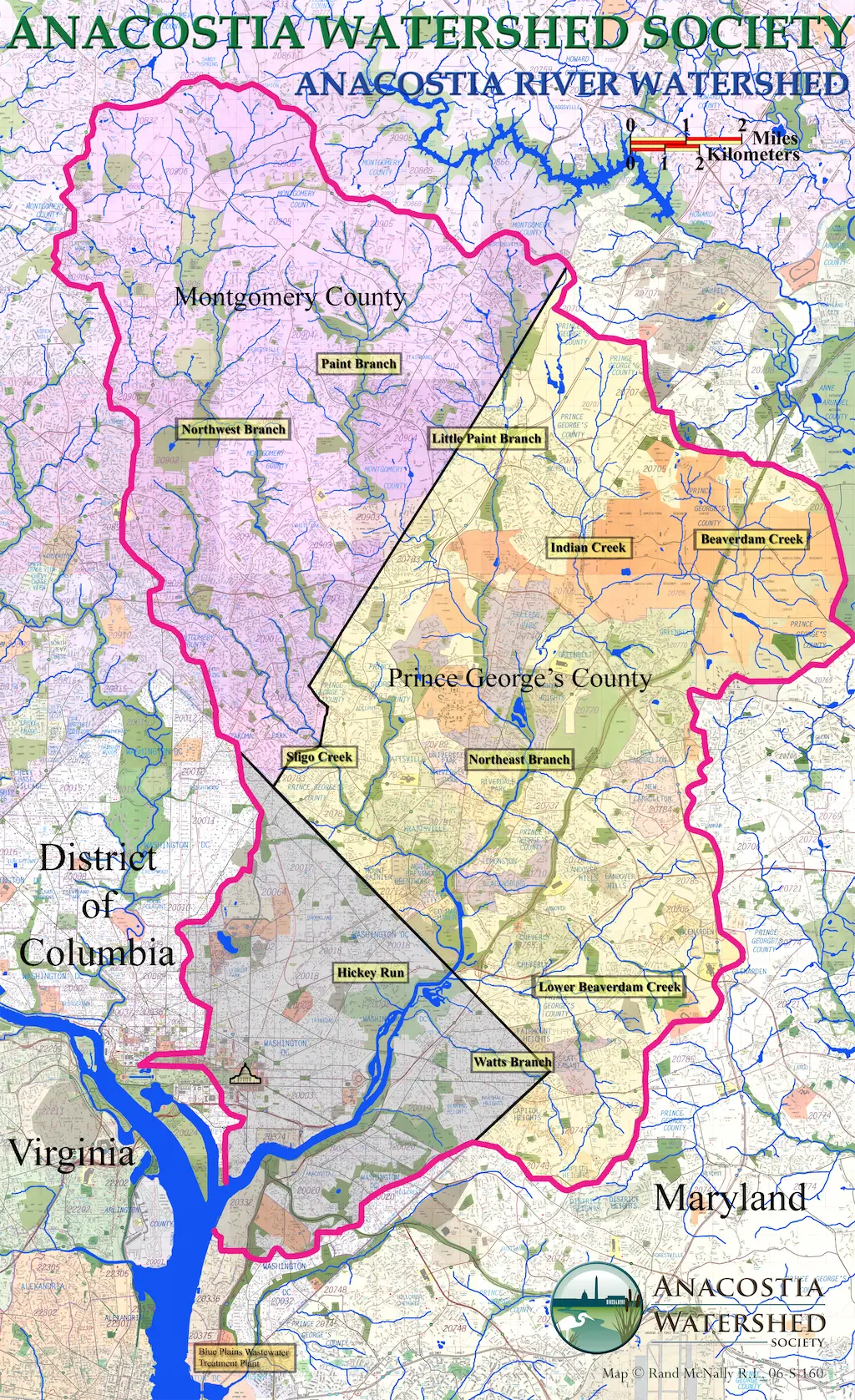
Covering 176 square miles of the District of Columbia, Prince George’s County and Montgomery County in Maryland, and home to over 1 million people, the Anacostia River Watershed is a river on the mend, recovering from centuries of industrialization and pollution to become an urban oasis in the middle of the National Capitol Area.
History
For thousands of years before European explorers and settlers sailed up the Anacostia, Native Americans hunted and farmed along its shores and feasted on the bounty of fish and seafood they found in the river. In 1608, when Captain John Smith sailed up the Potomac and into the Anacostia, he marveled at its depth and clarity. As Smith recorded in his journal, the tribe he found living at the mouth of the river were traders and the name he recorded for them on his 1612 map was “Nacotchtanck.” The origin of this word is unclear. The Native word for trade is “anaquash”, and town/village is “tanik”. In the 1600s, “Anaquashtanik” was commonly used for the tribe. Over the years that name gave us the names which we use today – “Anacostan” for the tribe, and “Anacostia” for the DC neighborhood and the river.
Life got hard for the Anacostans in the 17th century, their location was choice for trade, but they were also the first tribe to be attacked by other Native tribes from the north. The settlers brought new diseases, which afflicted Natives throughout the Chesapeake. The settlers also competed as traders, weakening the traditional source of the Anacostan’s wealth.Tribal and settler conflicts also cost them lives. In the 1660s, hard times caused the Anacostan chief to leave his tribal homestead, which was located where the Joint Anacostia-Bolling Base now sits. That land and much of the shoreline upriver on the Anacostia was cleared for tobacco farming by the settlers. (For more information about local indigenous history, visit DC Native History Project).
In the 18th century, the Port of Bladensburg served as a major center for colonial shipping. Since the river was 40 feet deep, it was able to accommodate ocean going ships. The 19th century’s major industrial activity, including ship building at the Washington Navy Yard and coal gasification further upriver, supported a vibrant economy, but also contributed to the destruction of wetlands and the pollution that we still battle today.
Development along the river led to the destruction of the forests, meadows and wetlands that make for a healthy watershed. As run-off and sediment clogged the river and reduced its depth, and as the population living near the river increased, flooding became a serious problem. In what we now recognize as counterproductive approaches, the Army Corps of Engineers built a series of levees designed to control flooding, further degrading the natural systems of the Anacostia.
Nature
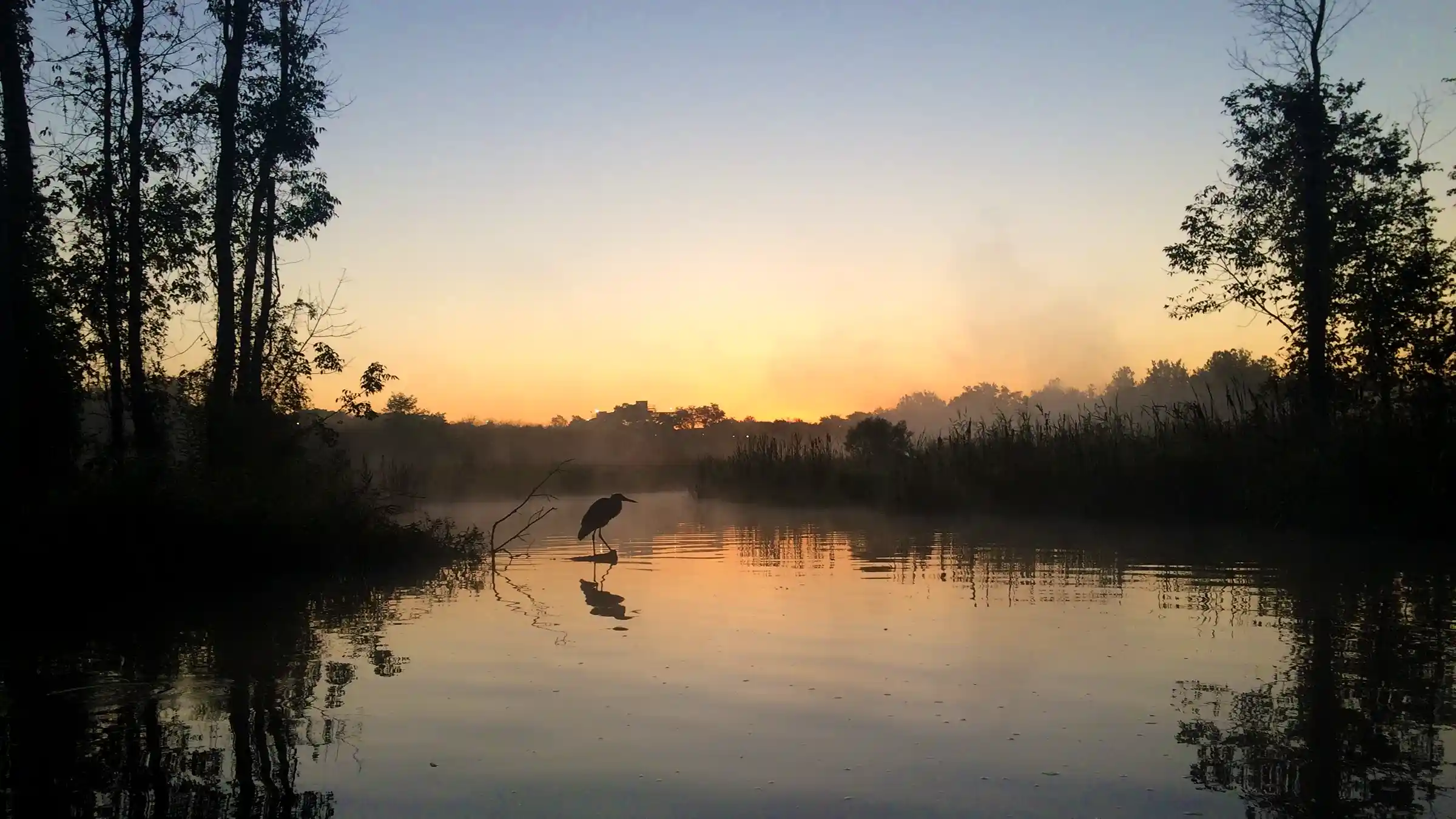
Despite centuries of development and pollution, the Anacostia River Watershed is still a remarkably rich natural area. A recent inventory of species, called a BioBlitz, counted 1,068 unique species, including rare and endangered species, birds, fish, mammals, amphibians, insects and many more. Journey along the river and you might see bald eagles, beavers, ospreys, cormorants, white perch, striped bass, crayfish, herons, turtles, egrets, otters, red fox, shad, kingfishers, catfish and even mussels!